Congress has finally come through to save the USPS

Users who are viewing this thread

    GrandAdmiral

    Well-known member
    Joined
    Nov 20, 2019
    Messages
    4,414
    Reaction score
    6,580
    Location
    Center of the Universe
    Online
    After all the years of crying for help, followed by the current Postmaster General trying to make its deathbed, Congress has finally come through to save the Postal Service from becoming insolvent. Key to the reform finally signed into law today is removal that archaic requirement forcing the USPS to fund health insurance for workers so far in advance.

    It also requires six-day delivery; DeJoy can now forget that pipe dream of his to cut that. Good day and a good bill with bipartisan support.
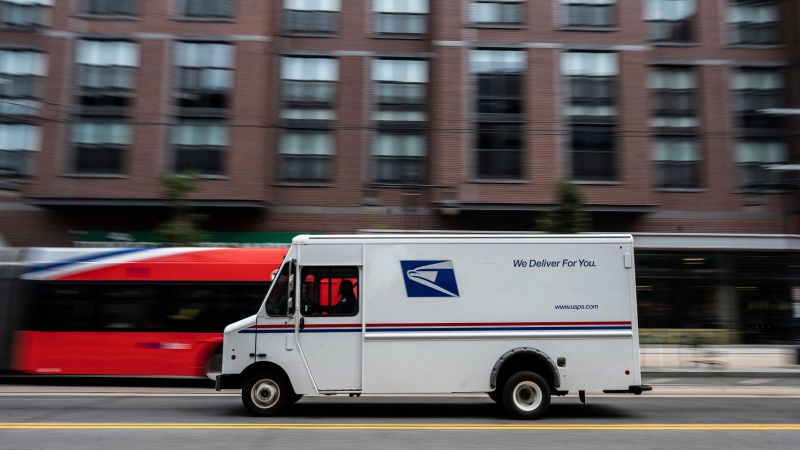
     
    Well... I love to see the logic behind cutting jobs and sorting centers will make the USPS better and more efficient...
    I know that Biden can't summarily fire him, but can't they put him on "HR Watch" like companies do with unwanted leadership?
    Any unwanted touch, any visit to BustyAsianBabes.com, a dollar out of place in an expense report gets him perp-walked out the door.
     
    Every day I wake up and wonder "what kind of bullshirt will I read about today?"

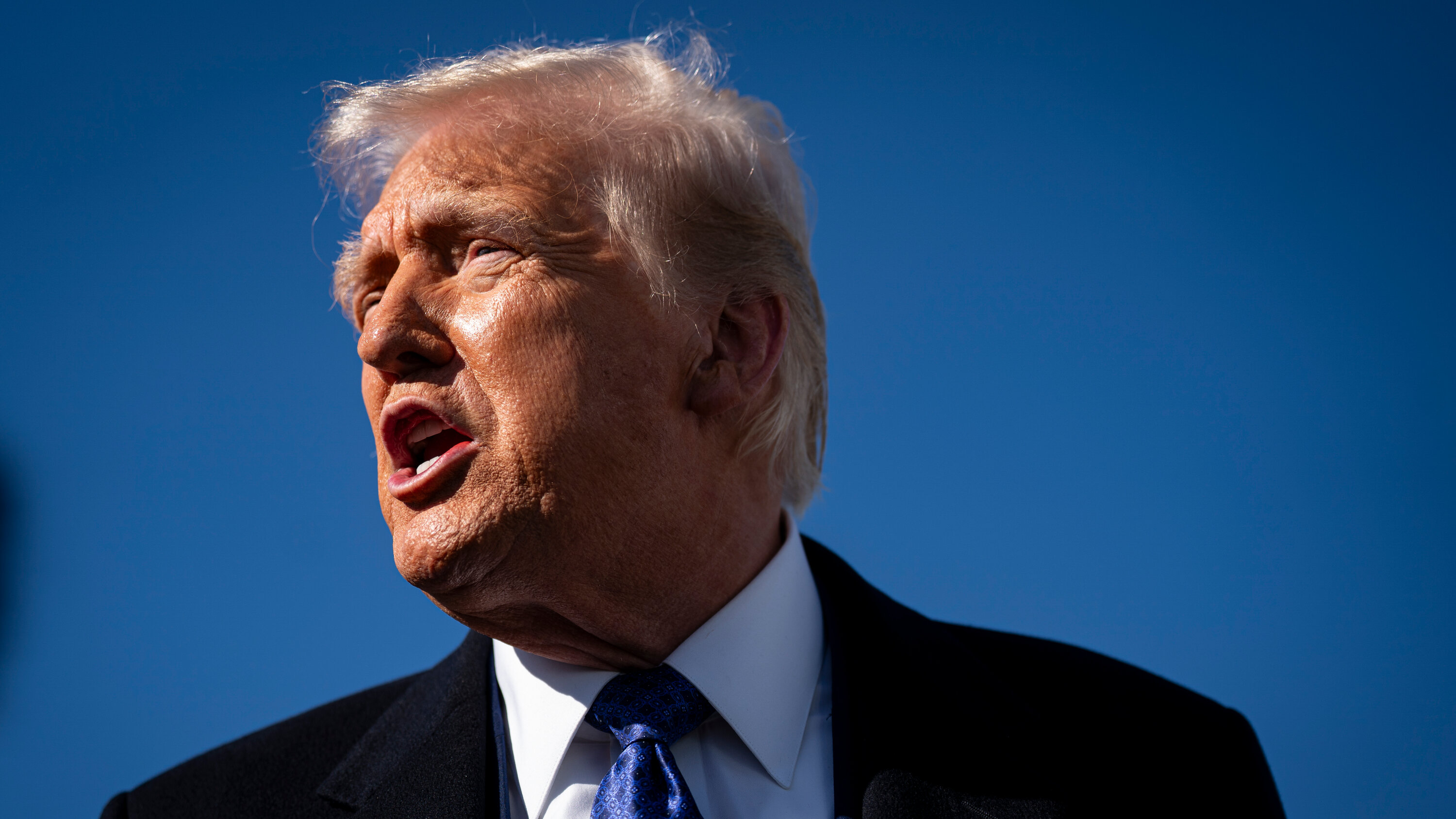
    Looks like orange guy is trying to wrest control of USPS

    U.S. President Donald Trump is preparing to dissolve the leadership of the U.S. Postal Service and absorb the independent mail agency into his administration, the Washington Post reported, opens new tab on Thursday.

    The newspaper, citing six people familiar with the plans, reported that Trump is expected to issue an executive order as soon as this week to fire the members of the Postal Service's governing board and place the agency under the control of the Commerce Department.
     
    Every day I wake up and wonder "what kind of bullshirt will I read about today?"

    Looks like orange guy is trying to wrest control of USPS

    U.S. President Donald Trump is preparing to dissolve the leadership of the U.S. Postal Service and absorb the independent mail agency into his administration, the Washington Post reported, opens new tab on Thursday.

    The newspaper, citing six people familiar with the plans, reported that Trump is expected to issue an executive order as soon as this week to fire the members of the Postal Service's governing board and place the agency under the control of the Commerce Department.
    This may be the case that shows whether or not Trump will follow what the judicial branch says.

    I think that the odds are not good for either the SCOTUS blocking this or for Trump to bow to the derision if they do.
     
    This may be the case that shows whether or not Trump will follow what the judicial branch says.

    I think that the odds are not good for either the SCOTUS blocking this or for Trump to bow to the derision if they do.

    I think if he controls USPS what will happen to the mail in voting (or the votes people send through the mail). He could have the power to do a lot (more) damage. I already didn't like DeJoy (a trump appointment from years ago), but when he suddenly resigned a week or so ago, I suspected something was going to happen.
     
    I think if he controls USPS what will happen to the mail in voting (or the votes people send through the mail). He could have the power to do a lot (more) damage. I already didn't like DeJoy (a trump appointment from years ago), but when he suddenly resigned a week or so ago, I suspected something was going to happen.
    how are military members overseas gonna vote? This is one more thing Trump has said that isn't going to happen
     
    President Donald Trump and the U.S. Postal Service's leadership have reportedly agreed to appoint a FedEx board member to succeed Louis DeJoy as postmaster general, heightening concerns that the administration is pushing the independent mail agency toward privatization.

    The Washington Postreported late Tuesday that Trump and the USPS Board of Governors are expected to name former Waste Management CEO David Steiner to lead the Postal Service. Steiner is currently the lead independent director at FedEx, a Postal Service competitor.

    Brian Renfroe, president of the National Association of Letter Carriers—a union representing nearly 300,000 active and retired letter carriers—called the decision to place Steiner at the head of the USPS "an aggressive step toward handing America's mail system over to corporate interests."

    "Private shippers have been waiting to get USPS out of parcel delivery for years," said Renfroe. "Steiner's selection is an open invitation to do just that. This isn't just bad policy—it's a direct assault on the workers who keep the mail moving and the public connected. The damage will hit rural communities hardest, where the Postal Service isn't just a convenience—it's a lifeline. And make no mistake: If this appointment stands, it threatens 7.9 million jobs tied to the postal industry and service to over 300 million Americans."

    "The board has the responsibility to do what is best for USPS," he added. "This decision is not only a failure in that responsibility but shows open contempt for the work of America's letter carriers and the public good."

    "The Trump administration has been relentless in its attempts to privatize America's most trusted institution, both outwardly and behind the scenes."

    The USPS Board of Governors—which is currently comprised of two Democrats, two Republicans, and an independent—is ultimately responsible for appointing the head of the mail service, who cannot be directly fired by the president.

    The Post reported Tuesday that postal governors, who are appointed by the president and confirmed by the Senate, submitted three postmaster general finalists to the White House in recent days, including Steiner.

    "Trump has the power to immediately reshape the [postal board] with five appointments: The board has four vacancies, plus a seat that is occupied temporarily," the Post noted. "Trump announced plans to nominate Anthony Lomangino, a GOP financier, to one of those roles."..............

     
    President Donald Trump and the U.S. Postal Service's leadership have reportedly agreed to appoint a FedEx board member to succeed Louis DeJoy as postmaster general, heightening concerns that the administration is pushing the independent mail agency toward privatization.

    The Washington Postreported late Tuesday that Trump and the USPS Board of Governors are expected to name former Waste Management CEO David Steiner to lead the Postal Service. Steiner is currently the lead independent director at FedEx, a Postal Service competitor.

    Brian Renfroe, president of the National Association of Letter Carriers—a union representing nearly 300,000 active and retired letter carriers—called the decision to place Steiner at the head of the USPS "an aggressive step toward handing America's mail system over to corporate interests."

    "Private shippers have been waiting to get USPS out of parcel delivery for years," said Renfroe. "Steiner's selection is an open invitation to do just that. This isn't just bad policy—it's a direct assault on the workers who keep the mail moving and the public connected. The damage will hit rural communities hardest, where the Postal Service isn't just a convenience—it's a lifeline. And make no mistake: If this appointment stands, it threatens 7.9 million jobs tied to the postal industry and service to over 300 million Americans."

    "The board has the responsibility to do what is best for USPS," he added. "This decision is not only a failure in that responsibility but shows open contempt for the work of America's letter carriers and the public good."

    "The Trump administration has been relentless in its attempts to privatize America's most trusted institution, both outwardly and behind the scenes."

    The USPS Board of Governors—which is currently comprised of two Democrats, two Republicans, and an independent—is ultimately responsible for appointing the head of the mail service, who cannot be directly fired by the president.

    The Post reported Tuesday that postal governors, who are appointed by the president and confirmed by the Senate, submitted three postmaster general finalists to the White House in recent days, including Steiner.

    "Trump has the power to immediately reshape the [postal board] with five appointments: The board has four vacancies, plus a seat that is occupied temporarily," the Post noted. "Trump announced plans to nominate Anthony Lomangino, a GOP financier, to one of those roles."..............

    Which is weird because, iirc, FedEx uses the USPS for delivery in rural areas.
     
    Which is weird because, iirc, FedEx uses the USPS for delivery in rural areas.
    The USPS also used to use FedEx as a vendor as well. They were one of FedEx’s larger accounts. I believe that relationship just ended recently.
     
    The USPS also used to use FedEx as a vendor as well. They were one of FedEx’s larger accounts. I believe that relationship just ended recently.

    for 20 years ( by contract ) , Fedex handled air cargo for the USPS. Til Sept 2024. Now that is handled by UPS.

    As for Fedex- they still use USPS for "last mile delivery" as @bird alluded to

    So UPS now holds the air cargo contract. Its a 5 year contract that began in Sept 2024.
     
    In towns where Washington DC is an abstraction, the post office is the front desk of American democracy – sometimes the only public space at all.

    Here, postmasters are “the human side of government”, as the senator Jennings Randolph put it in 1976. “When such offices are closed,” he warned, “the American flag really comes down.”

    Championed by Benjamin Franklin in 1775, the roots of the US postal service – whose mandate is to “bind the nation together” – are older than the republic itself. The constitution calls for “post offices and post roads”.

    The USPS is still legallyobligated to provide a “basic and fundamental” service to all Americans. In Scottsbluff, Nebraska, a rural carrier drives more than 700 miles a year to serve just two households.

    But after years in the red – and amid open hostility from the Trump administration – its future looks uncertain.

    The USPS has lost about $114bn since 2007, according to financial reports, amid declining letter volume, competition from private carriers and rising employee costs. Meanwhile, the specter of privatization looms larger than ever.

    “The postal service is a joke,” Donald Trump toldreporters in 2020. A reform plan during his previous administration called for restructuring it “to return it to a sustainable business model or prepare it for future conversion from a Government agency into a privately-held corporation”.

    Given this historical scorn, it was no surprise when reports broke in February that Trump was considering dissolving the agency’s leadership and absorbing it into the Department of Commerce.

    “The fate of the USPS is no longer financial or managerial, but political,” James O’Rourke, a professor of management at the University of Notre Dame, recently told me.

    “Putting the post office up for an IPO would not be much of a stretch in the current climate. The checks and balances are gone.”

    Indeed, a Wells Fargo memo to investors titled “USPS Privatization: A Framework” was leaked last month. It reads: “Parcel could be carved out and sold or IPOed.”

    The plan predicts parcel prices would increase 30%–140% across product lines and proposes a post office sell-off so that “value can be harvested” from the real estate.

    Yet if the parcel segment were “carved out”, not all of the carcass would bear meat. Investors will seize only the parts they can further monetize, O’Rourke says. That would mean closing small-town post offices and ending home delivery on unprofitable routes.

    Think of the mule train that descends into Havasupai territory in the Grand Canyon; the small aircraft and seasonal boats that serve Little Diomede, Alaska, where residents can see Russia from their windows; or Point Roberts, Washington, where mail crosses Canada to reach a US town. If universal service falters, those addresses are likely to be abandoned first.

    People in affected zip codes – already more likely to be lower income – will have to travel to pick up parcels or pay steep delivery costs. “Those people will do with less or do without,” O’Rourke says.

    But the cost of losing universal service would be more than financial. Vote-by-mail and absentee ballots are particularly critical in rural areas with distant polling stations, and the USPS ensures those ballots reach voters.

    It also handles 1.2bn prescription-drug shipments each year, as of 2020, according to the National Association of Letter Carriers union. In places with no nearby banks, the post office may be the only location where residents can pay bills.

    Rural postal workers also fulfill a civic role that transcends transporting mail. A study of village postmasters from the 1970s illustrates how closely woven they can become into civic life: “People going out of town commonly leave their house keys with the postmaster … residents leave notes with the postmaster for friends to retrieve later in the day.”

    While the advent of the internet renders that depiction somewhat antiquated, its essence remains true. “Rural carriers are still the fabric that knits some communities together,” Don Maston, president of the National Rural Letter Carriers’ Association, told me.

    In some towns, carriers may be the only contact residents have with the outside world – and thus a lifeline, he added. Carriers still carry out “wellness checks” if a resident fails to collect their mail.………

     
    The US Postal Service will run out of funds within a year, unless lawmakers lift a cap on how much money the agency can borrow, according to the postmaster general.

    In an interview with the Associated Press, David Steiner warned that the postal service – which relies on stamps and service fees rather than tax dollars to deliver mail six days a week to every address in the country – would run out of cash for employees and vendors by February next year.

    The agency has operated with a financial shortfall almost every fiscal year since 2007, as people and businesses have moved toward paperless billing and digital communication, forgoing first-class mail.

    But mail deliveries have continued, with USPS borrowing money from the US treasury to compensate for losses.

    Steiner, who is scheduled to testify before Congress this month, has called for changes to a federal law that caps the agency’s borrowing at $15bn.………


    Create an account or login to comment

    You must be a member in order to leave a comment

    Create account

    Create an account on our community. It's easy!

    Log in

    Already have an account? Log in here.

    General News Feed

    Fact Checkers News Feed

    Back
    Top Bottom