All Things LGBTQ+

Users who are viewing this thread

    Farb

    Mostly Peaceful Poster
    Joined
    Oct 1, 2019
    Messages
    6,616
    Reaction score
    2,232
    Age
    50
    Location
    Mobile
    Offline
    Didn't really see a place for this so I thought I would start a thread about all things LGBTQ since this is a pretty hot topic in our culture right now

    https://www.cnbc.com/2021/06/17/sup...y-that-refuses-to-work-with-lgbt-couples.html

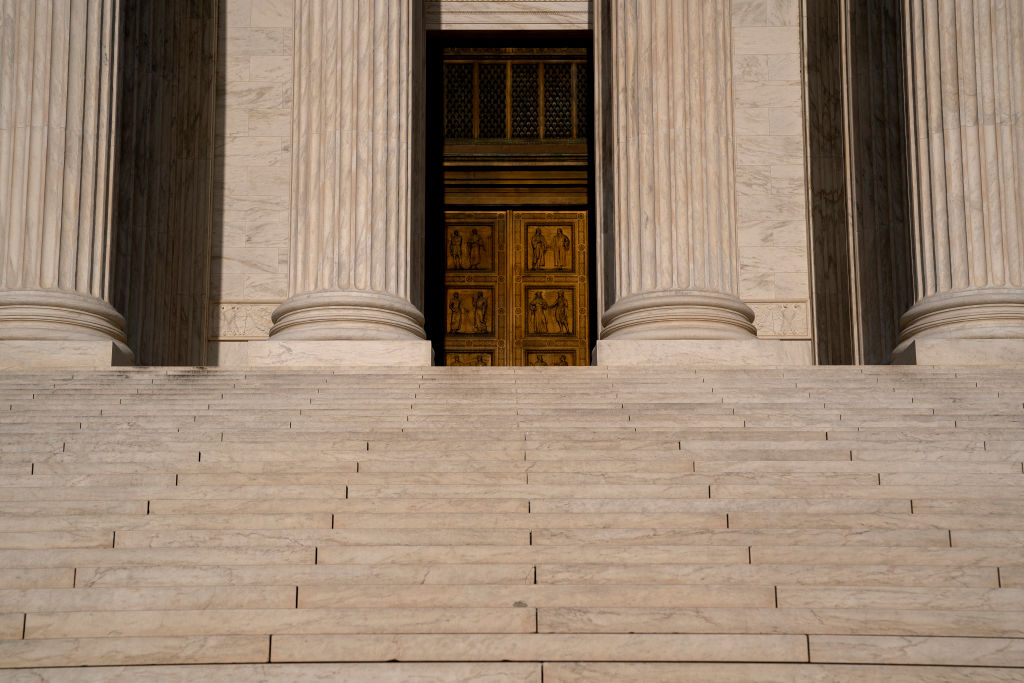
    • The Supreme Court on Thursday delivered a unanimous defeat to LGBT couples in a high-profile case over whether Philadelphia could refuse to contract with a Roman Catholic adoption agency that says its religious beliefs prevent it from working with same-sex foster parents.
    • Chief Justice John Roberts wrote in an opinion for a majority of the court that Philadelphia violated the First Amendment by refusing to contract with Catholic Social Services once it learned that the organization would not certify same-sex couples for adoption.

    I will admit, I was hopeful for this decision by the SCOTUS but I was surprised by the unanimous decision.

    While I don't think there is anything wrong, per se, with same sex couples adopting and raising children (I actually think it is a good thing as it not an abortion) but I also did not want to see the state force a religious institution to bend to a societal norm.

     
    Interesting article
    ==============


    t the turn of the decade, gay male and non-binary pop stars seemed poised to take pop music by storm. Lil Nas X broke out with Old Town Road – which blew up on TikTok, sold about 18.5m copies and remains tied with Shaboozey’s A Bar Song (Tipsy) and Mariah Carey’s All I Want for Christmas Is You as the longest-running No 1 single in US history – and artists such as Sam Smith, Troye Sivan and Olly Alexander from Years & Years were all singing about gay love and sex.

    But the initial promise has stalled. Lil Nas X’s attempts to build on his smash debut album have fizzled, and he is publicly dealing with mental health issues.

    In October, Khalid released his first album since being outed by his ex last year but only sold 10,000 copies in the first week in the US. A previous album, 2019’s Free Spirit, sold some 200,000 copies in the first week and led to him briefly dethroning Ariana Grande as the most listened to artist on Spotify.

    After chart-topping fame with Years & Years, Alexander’s debut solo album, this year’s Polari, could only peak at No 17 in the UK, with no charting singles apart from Dizzy, the UK’s 2024 Eurovision entry, which reached No 42. He tells me that being out in the “major label machine … felt like I was trying to pull off an impossible magic trick”.

    When it comes to selling gay music to the public, he says, “men explicitly loving men is so threatening to the status quo and patriarchy, which makes it harder to gain mainstream support”.

    Only Sivan has stayed culturally relevant, if not commercially dominant, thanks in part to savvy collaborations with two of pop’s biggest female stars, Charli xcx and Ariana Grande. How did gay male artists lose their place in the pop landscape?…….

    For gay men in pop, says Jason King, dean of the University of Southern California’s Thornton School of Music, “there’s no question there is a glass ceiling. It’s not like we’ve always had hundreds of queer men in pop music hitting the top of the charts, and suddenly now we’re facing a drought”.

    You might argue: what about the 1980s? From here, the decade looks like a golden age of gay pop, thanks mostly to British men: Freddie Mercury (who was British Parsi), Elton John, George Michael, Pet Shop Boys, Dead or Alive’s Pete Burns.

    But at the time, few were out: pretty much just Bronski Beat and Frankie Goes to Hollywood. Although the straight public’s illiteracy about gay culture was proved when BBC Radio 1’s Mike Read yanked Frankie’s 1984 single Relax off air as he realised what it was actually about.

    To most people in the mid-80s, what are now unmistakable as queer codes – makeup, androgynous styling, elaborate hairstyles – just signalled “flamboyant pop stars”, which also created an indelible blueprint of how a pop star of any persuasion could look and sound.

    Nonetheless, the Aids epidemic brought much of this progress to a screeching halt. Pet Shop Boys’ US career is thought to have stalled because their video for 1988’s Domino Dancing was seen as too gay. Mercury died in 1991. Elton John came out in 1992 when he was well past his pop peak, and George Michael wasn’t outed until 1998.

    Very rarely have gay pop stars been allowed to be honest about their sexuality in ways that are also commercially successful, as with Bronski Beat’s 1984 single Smalltown Boy or the Scissor Sisters in the early 00s. Lasting success is even more elusive.

    Hence why Lil Nas X’s breakthrough felt like a watershed moment, picking up the mantle of the gay men in pop who came before him. Here was an out Black gay man breaking chart records, winning awards and shaping pop culture, thanks to wittily provocative music videos such as Industry Baby, where naked men danced in prison showers.

    It looked as though true change had arrived. But within the industry, “record labels weren’t running to sign hundreds of gay men in pop, hip-hop and R&B”, says King. Or as Vincint, a gay non-binary singer, says: “Once the industry found one, that was enough.”

    In contrast, queer female pop stars have achieved full-beam mainstreaming, among them Chappell Roan, Billie Eilish and Janelle Monáe. Roan’s now familiar presence in the charts makes it easy to forget how extraordinary her meteoric success has been with sexually explicit songs about being a lesbian.

    Her mass appeal is not just due to the quality of her music, says Cragg, but also gendered dynamics of social stigma and homophobia: “If you’re a straight guy, you can blast Pink Pony Club because you’ve seen all the memes of tough, burly men loving the song. But if your most-played artist on Spotify is Troye Sivan or Sam Smith, you might worry your friends will think you’re gay or less of a man.”

    For queer women in pop, says King: “There’s a way in which their sexuality can easily be recuperated by the straight male gaze, so men don’t feel excluded by their queerness.”

    That same “logic” doesn’t apply to male queerness. Even if a male act finds a supportive label, manager, publicist and booking agent, being pigeonholed as a “gay pop star” can still limit his reach – especially if he’s singing about gay sex.……..


    The Trump administration is facing a new legal complaint from a group of government employees who are affected by a new policy going into effect Thursday that eliminates coverage for gender-affirming care in federal health insurance programs.

    The complaint, filed Thursday on the employees’ behalf by the Human Rights Campaign, is in response to an August announcement from the Office of Personnel Management (OPM) that it would no longer cover “chemical and surgical modification of an individual’s sex traits through medical interventions” in health insurance programs for federal employees and US Postal Service workers.

    The complaint argues that denying coverage of gender-affirming care is sex-based discrimination and asks the personnel office to rescind the policy.


    “This policy is not about cost or care – it is about driving transgender people and people with transgender spouses, children, and dependents out of the federal workforce,” the Human Rights Campaign Foundation president, Kelley Robinson, said in a statement announcing the move.

    The complaint, filed with the Equal Employment Opportunity Commission, includes testimonies from four current federal workers at the state department, health and human services and the postal service who would be directly affected by the elimination of coverage.

    For instance, the postal service employee has a daughter whose doctors recommended that she get puberty blockers and potentially hormone replacement therapy for her diagnosed gender dysphoria, which would not be covered under the new OPM policy, according to the complaint.…….

     
    Social media platform X, owned by world's richest man Elon Musk, is throwing its weight behind a Texas woman being investigated for posting a photo of a transgender woman in a women's bathroom.

    On Dec. 29, X announced that it would be supporting the legal case of Michelle Evans, the chair of the Williamson County Republican Party.

    In 2023, Evans posted a photo of a transgender activist using the women's restroom at the Texas Capitol during protests against Texas Senate Bill 14, which banned gender affirming care for minors.

    After Evans posted the photo on X, she was investigated by the Texas Department of Public Safety and was required to surrender her phone to authorities.

    DPS told Evans the investigation was spurred at the behest of Travis County District Attorney Jose Garza, who said Evans violated a Texas law barring video recordings in places like public bathrooms.

    Evans sued Garza, saying he had violated her First Amendment rights. A district court and the U.S. Fifth Circuit Court of Appeals denied Evans' request to block the investigation, and Evans is now appealing for a rehearing. That's where X comes in.

    X's Global Government Affairs team wrote that it was "proud to support" Evans. The post repeatedly misgenders the activist in Evans' photo and says that the Fifth Circuit's decision not to block the investigation was "misguided and dangerous." X said it is assisting Evans in getting the case reheard "en banc," which means the case would be heard by all 17 judges on the Fifth Circuit.

    "We look forward to the full Fifth Circuit correcting this wrong and preserving free speech, which is the foundation of American democracy," X Corp said.………


    The US supreme court will consider state bans on transgender athletes on Tuesday in a major LGBTQ+ rights legal battle that could have far-reaching consequences beyond youth sports.

    The court is hearing oral arguments in two cases brought by trans students who challenged Republican-backed laws in West Virginia and Idaho prohibiting trans girls from participating in girls’ athletic programs.

    Those bans were both previously blocked by federal courts, but the states appealed to the supreme court, which is hearing a case on trans people’s access to sports for the first time. If the court’s conservative supermajority sides with the states and upholds the bans, the rulings could have significant ripple effects, paving the way for the enforcement of a range of anti-LGBTQ+ policies.


    If the rulings are broad, civil rights advocates warn, the supreme court could make it easier for lawmakers and school officials to ban trans students’ access to appropriate bathrooms and facilities, restrict LGBTQ+ youth’s ability to use chosen names and pronouns, enforce strict dress codes, limit protections against anti-LGBTQ+ harassment, and further deny access to accurate identification documents.

    “It’s really scary. The supreme court is poised to tell us whether dislike and moral disapproval of a specific group can be a real basis to make law,” said Cathryn Oakley, senior director of legal policy for the Human Rights Campaign, an LGBTQ+ rights group.……

     
    The US supreme court will consider state bans on transgender athletes on Tuesday in a major LGBTQ+ rights legal battle that could have far-reaching consequences beyond youth sports.

    The court is hearing oral arguments in two cases brought by trans students who challenged Republican-backed laws in West Virginia and Idaho prohibiting trans girls from participating in girls’ athletic programs.

    Those bans were both previously blocked by federal courts, but the states appealed to the supreme court, which is hearing a case on trans people’s access to sports for the first time. If the court’s conservative supermajority sides with the states and upholds the bans, the rulings could have significant ripple effects, paving the way for the enforcement of a range of anti-LGBTQ+ policies.


    If the rulings are broad, civil rights advocates warn, the supreme court could make it easier for lawmakers and school officials to ban trans students’ access to appropriate bathrooms and facilities, restrict LGBTQ+ youth’s ability to use chosen names and pronouns, enforce strict dress codes, limit protections against anti-LGBTQ+ harassment, and further deny access to accurate identification documents.

    “It’s really scary. The supreme court is poised to tell us whether dislike and moral disapproval of a specific group can be a real basis to make law,” said Cathryn Oakley, senior director of legal policy for the Human Rights Campaign, an LGBTQ+ rights group.……


    There is no "could", the SC is going to do it and make disenfranchisement and violence towards transgendered people legal.
     
    The US supreme court will consider state bans on transgender athletes on Tuesday in a major LGBTQ+ rights legal battle that could have far-reaching consequences beyond youth sports.

    The court is hearing oral arguments in two cases brought by trans students who challenged Republican-backed laws in West Virginia and Idaho prohibiting trans girls from participating in girls’ athletic programs.

    Those bans were both previously blocked by federal courts, but the states appealed to the supreme court, which is hearing a case on trans people’s access to sports for the first time. If the court’s conservative supermajority sides with the states and upholds the bans, the rulings could have significant ripple effects, paving the way for the enforcement of a range of anti-LGBTQ+ policies.


    If the rulings are broad, civil rights advocates warn, the supreme court could make it easier for lawmakers and school officials to ban trans students’ access to appropriate bathrooms and facilities, restrict LGBTQ+ youth’s ability to use chosen names and pronouns, enforce strict dress codes, limit protections against anti-LGBTQ+ harassment, and further deny access to accurate identification documents.

    “It’s really scary. The supreme court is poised to tell us whether dislike and moral disapproval of a specific group can be a real basis to make law,” said Cathryn Oakley, senior director of legal policy for the Human Rights Campaign, an LGBTQ+ rights group.……


    Expect a very narrow decision allowing states to decide.
     
    Until recently, I was a music teacher in north Texas. I also happen to be trans. I have never, ever told a student about my identity.

    At work, I was “stealth” – a term that means that I passed as a cisgender man. Only my administrators knew I was trans, because I was not yet taking gender-affirming hormones when I started this job in my early 20s. I’m now in my late 20s.

    My decision to stay stealth was affected by the political climate. Texas has been trying to pass a bathroom ban for 10 years, and in December, they finally implemented the rule. It applies to restrooms and changing rooms in public buildings, schools and universities.

    Because of how I look, I can get away with going into the correct bathroom. But if someone were to report me to the district, it would cost my school $25,000 for the first offense, and then $125,000 every subsequent time.

    This law only applies to multi-occupancy, single-sex bathrooms – the type of boys’ and girls’ rooms you see in a public school like mine. Single-stall bathrooms, which are sometimes marked as gender-neutral, are still OK.

    Proponents of the bill say it’s not a violation of our civil rights because of that loophole. That did not stop some people from removing gender-neutral bathrooms and putting in gendered bathrooms – this happened at the University of Texas at Austin.

    If someone reported me, my school would have had to pay the fine. But we’re living in a state where public schools are being strangled for money.

    School districts in Texas are underwater right now. It did not feel safe for me to use the correct bathroom, both because I wouldn’t want to be responsible for my administrators paying a fine, and because of the harm that might come from me being “caught”.

    One day, I left school and drove to a gas station to use their bathroom. Another day, I held it and thought I was going to pee myself in front of class. I’ve gotten so many UTIs from holding it, it’s insane. I noticed that my mind was more clouded.

    My body was breaking down. I was exhausted because I was not sleeping. I still found ways to pull it together for my students, but I knew that eventually I wouldn’t be the best version of myself for them.

    This is humiliation disguised as policy, and it is why I decided to leave a job I love and was born to do. My last day of teaching was before the winter holiday break.……….


    Create an account or login to comment

    You must be a member in order to leave a comment

    Create account

    Create an account on our community. It's easy!

    Log in

    Already have an account? Log in here.

    General News Feed

    Fact Checkers News Feed

    Back
    Top Bottom