Suppose Climate Change is real, but we can’t stop it (1 Viewer)

Users who are viewing this thread

samiam5211

Well-known member
Joined
Oct 1, 2019
Messages
4,128
Reaction score
4,887
Age
48
Location
Earth
Offline
At some point even the Greatas of the world may have to admit that climate change is not something we can prevent. Whether or not it is human caused, there will be a point if no return.

Where is the point where humanity is better served by focusing resources on adaptation rather than prevention?

There is likely much overlap between prevention and adaptation.

One example of this might be the activists’ push against fossil fuels...

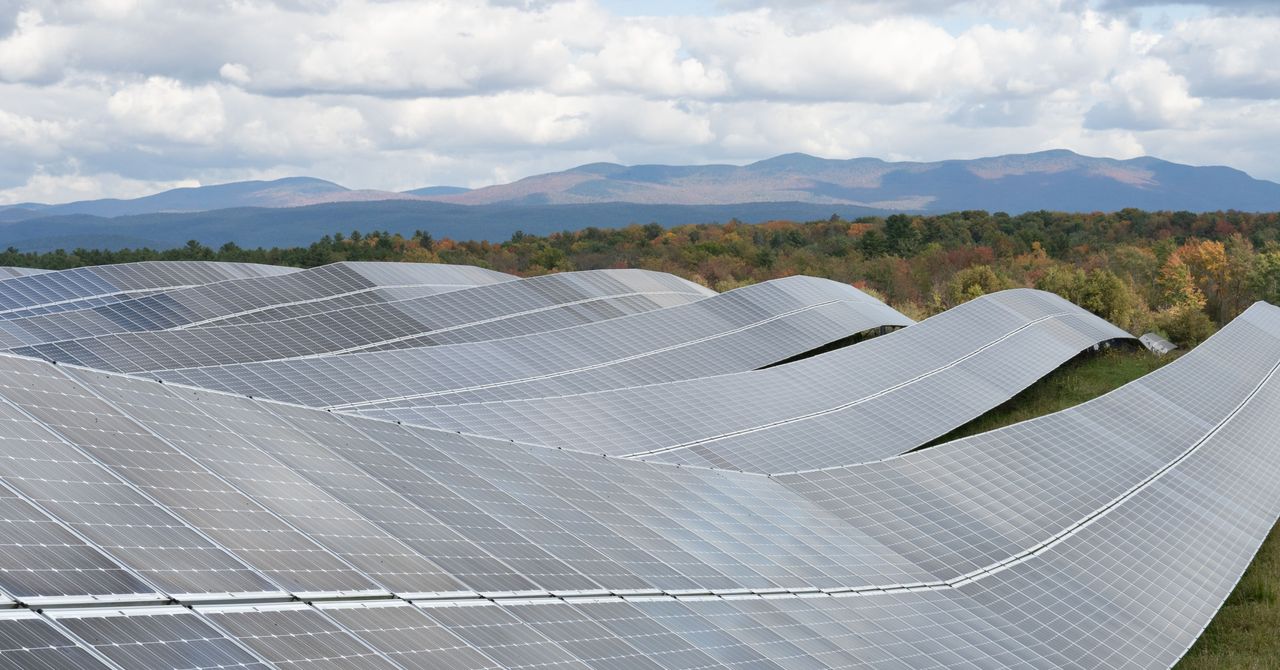
Maybe we should be trying use as much solar power as possible now to save fossil fuels for a time when we have a period of glaciation in an area where humans live today? Maybe we will need that oil and gas should there be a time when the Midwest is below freezing five months a year. This is not an uncommon situation in Earth’s relatively recent history.

I do believe that the climate is changing and that we will fail to stop it, and we are the ancestors of people who will have to grow their food in different regions from us and get their energy from different places.

The sooner humanity begins to diversify these necessities the better.
 
Last edited:

Guess this can go here
==================
Like many of us who are mindful of our plastic consumption, Beth Gardiner would take her own bags to the supermarket and be annoyed whenever she forgot to do so. Out without her refillable bottle, she would avoid buying bottled water. “Here I am, in my own little life, worrying about that and trying to use less plastic,” she says.

Then she read an article in this newspaper, just over eight years ago, and discovered that fossil fuel companies had ploughed more than $180bn (£130bn) into plastic plants in the US since 2010.

“It was a kick in the teeth,” says Gardiner. “You’re telling me that while I am beating myself up because I forgot to bring my water bottle, all these huge oil companies are pouring billions …” She looks appalled. “It was just such a shock.”

Two months before that piece was published, a photograph of a seahorse clinging to a plastic cotton bud had gone viral; two years before that England followed Wales, Scotland and Northern Ireland and introduced a charge for carrier bags.

“I was one of so many people who were trying to use less plastic – and it just felt like such a moment of revelation: these companies are, on the contrary, increasing production and wanting to push [plastic use] up and up.” Then, says Gardiner, as she started researching her book Plastic Inc: Big Oil, Big Money and the Plan to Trash our Future, “it only becomes more shocking.”…….

In the past 20 years, Gardiner writes, plastic production has doubled, and it will double again, perhaps triple, in the near future. Petrochemicals for plastic are, she says, “expected to be the largest single driver of oil demand in the decades to come. Obviously these oil companies can see what’s coming – they understand that that shift away from fossil fuels is a threat to their business model that has been so profitable for them.”

Plastic, she says, “is a way for them to keep drilling and to keep making money. Putting their expertise and muscle into solar or wind power was not the way they wanted to go. It’s not as profitable as selling oil and gas, so they’re all in on the current model, and plastic is a way to perpetuate it. Which is why it is, I guess, even more catastrophic. Because if it’s enabling the industry to keep drilling, to keep selling oil and gas, that is a huge threat to the climate.”………

Meanwhile, Gardiner details how the fossil fuel and plastics industry – in many cases one and the same – has lobbied to prevent legislation and scupper bills that would regulate it.

Last year, lobbyists flooded UN-hosted talks to derail the global plastics treaty to tackle plastic pollution. A post-Brexit Britain has separated itself from EU regulations on plastic.

“The EU has been far from perfect, but they are the most aggressive regulator, both of these chemicals coming from plastics and of single use plastics,” says Gardiner. The US, she says, is “a whole other story”.

There is, she says, “zero prospect for any kind of effective regulation of plastics under the Trump administration. Every environmental regulation is going backwards.”

In the US, there has been local and state level action, such as in California, which has just extended its ban on plastic bags to include the thicker “bag for life” types, and laws to make plastic producers – rather than the taxpaying public – responsible for the life cycle of their products.……


The US Had a Big Battery Boom Last Year​


“Despite Donald Trump’s unrelenting attacks on renewable energy, there’s a quiet revolution happening on US grids.”

 
Part of the problem is that while climatologists are very smart, they're lousy salesmen and they completely misunderstand the target audience.

You could do a Christmas Carol thing with an electric or oil/gas CEO and prove to him beyond a shadow of a doubt that things are catastrophic in 2200, just worldwide anarchy and collapse and when you got back he wouldn't change a thing because 2200 is way, way beyond his concern. He won't be alive, his kids won't be alive and he's got to deliver profits now.

What the watchdogs ought to do is emphasize things like this section of a climate report I found halfway through this article.


I have a decent chance of being around and voting in 2050. My kids most certainly will be. Our hypothetical CEO might himself still be kicking by then.

Scientists need to emphasize this. Not far-off projections, but what will happen to the people reading the article, watching the news segment and, most importantly, VOTING right now. Like, this means you, Ma and Pa Kettle. This means you, Millennial Mike and Millie.
I hesitate to respond to this because I don't know the answer. I remember watching a history science documentary a while back. One thing I still won't forget from it is their point that sometimes innovation and discoveries won't be accepted until the obstinate generation dies off. Only did society accept them once the new generation comes into power.

For me personally, I have a brother that believes that global warming is part of the cycle like some here. This is a topic that we discussed as early as the 90s. Admittedly, I wasn't quite as familiar with the science then. I knew scientists were overwhelmingly sure from the various media sources that I consumed, particularly indepth npr reporting. And that was enough for me Unfortunately, my brother was a drudge report type. So I'm thinking, like every other issue out there, the poison in American's mind is that right wing ecosystem.

And that reminds me the effect of Bannon's Clinton Cash on mainstream media. For years, the MSM didn't indulge these conspiracy type reporting. Bannon made it so that his "facts" would entice a naive reporter. It did and one reporting lead to a wild fire in the MSM. We know now that Bannon was full of shirt.

tl;dr....Americans are stupid.
 
I hesitate to respond to this because I don't know the answer. I remember watching a history science documentary a while back. One thing I still won't forget from it is their point that sometimes innovation and discoveries won't be accepted until the obstinate generation dies off. Only did society accept them once the new generation comes into power.

For me personally, I have a brother that believes that global warming is part of the cycle like some here. This is a topic that we discussed as early as the 90s. Admittedly, I wasn't quite as familiar with the science then. I knew scientists were overwhelmingly sure from the various media sources that I consumed, particularly indepth npr reporting. And that was enough for me Unfortunately, my brother was a drudge report type. So I'm thinking, like every other issue out there, the poison in American's mind is that right wing ecosystem.

And that reminds me the effect of Bannon's Clinton Cash on mainstream media. For years, the MSM didn't indulge these conspiracy type reporting. Bannon made it so that his "facts" would entice a naive reporter. It did and one reporting lead to a wild fire in the MSM. We know now that Bannon was full of shirt.

tl;dr....Americans are stupid.
And shortsighted.

Which is why if I were confident in some dire consequence of global warming due to arrive by 2030-2050, I'd lead with it every chance I got.
 
Sea levels along the world’s coastlines are much higher than previously assumed, more than 3 feet in some regions, according to new research, raising alarms that the world is underestimating the extent of the threat and how quickly coastlines could disappear.

Sea level rise is one of the most visible and alarming impacts of the human-driven climate crisis, threatening hundreds of millions of people who live along global coastlines. Scientists estimate we’re already locked into around 6 inches of global sea level rise by 2050.

But their calculations may not be starting from an accurate place, according to the study, published Wednesday in Nature.

To predict how sea level rise will affect coastal communities, scientists often use a model which estimates sea level by looking at the Earth’s gravitational field and rotation. But this doesn’t account for other influencing factors, such as tides, winds, ocean currents, temperature and saltiness.

For reliable sea level information, the model should be combined with real-world satellite data that can accurately measure sea height, said Philip Minderhoud, a study author and an associate professor at Wageningen University and Research in the Netherlands.

The report authors analyzed 385 peer-reviewed studies published over the past 15 years on sea level rise and the hazards it poses to coastlines. They found 90% relied only on assumptions from models rather than real, measured observations.

It’s a “methodological blind spot” that has resulted in widespread underestimations of coastal sea levels and people’s exposure to their related hazards, Minderhoud said.

Global coastal sea level is on average around 1 foot higher than currently assumed, the report found, with some places — such as Southeast Asia and parts of the Pacific — reaching up to 3 feet higher.

The findings suggest that if sea level rises by around 3 feet, it would put 37% more land under water than currently assumed, affecting up to 132 million people across the world.

“Simply put, if sea level in reality is higher for your particular island or coastal city than was previously assumed, the impacts from sea-level rise will happen sooner than projected,” Minderhoud said.

The findings show “the impacts of sea-level rise under climate change have been systematically underestimated,” said Matt Palmer, an associate professor at the University of Bristol, who was not involved in the study.

Jonathan Bamber, director of the Bristol Glaciology Centre, who has worked on sea level rise for around 20 years, said the results left him “genuinely surprised.”

Wrong assumptions about present-day sea level rise will have important implications for the future “in terms of the area and number of people potentially affected,” said Bamber, who was also not involved in the study. Although they do not affect projections for how much sea level rise might happen in the future, he added...........


Sea levels along the world’s coastlines are much higher than previously assumed, more than 3 feet in some regions, according to new research, raising alarms that the world is underestimating the extent of the threat and how quickly coastlines could disappear.

Sea level rise is one of the most visible and alarming impacts of the human-driven climate crisis, threatening hundreds of millions of people who live along global coastlines. Scientists estimate we’re already locked into around 6 inches of global sea level rise by 2050.

But their calculations may not be starting from an accurate place, according to the study, published Wednesday in Nature.

To predict how sea level rise will affect coastal communities, scientists often use a model which estimates sea level by looking at the Earth’s gravitational field and rotation. But this doesn’t account for other influencing factors, such as tides, winds, ocean currents, temperature and saltiness.

For reliable sea level information, the model should be combined with real-world satellite data that can accurately measure sea height, said Philip Minderhoud, a study author and an associate professor at Wageningen University and Research in the Netherlands.

The report authors analyzed 385 peer-reviewed studies published over the past 15 years on sea level rise and the hazards it poses to coastlines. They found 90% relied only on assumptions from models rather than real, measured observations.

It’s a “methodological blind spot” that has resulted in widespread underestimations of coastal sea levels and people’s exposure to their related hazards, Minderhoud said.

Global coastal sea level is on average around 1 foot higher than currently assumed, the report found, with some places — such as Southeast Asia and parts of the Pacific — reaching up to 3 feet higher.

The findings suggest that if sea level rises by around 3 feet, it would put 37% more land under water than currently assumed, affecting up to 132 million people across the world.

“Simply put, if sea level in reality is higher for your particular island or coastal city than was previously assumed, the impacts from sea-level rise will happen sooner than projected,” Minderhoud said.

The findings show “the impacts of sea-level rise under climate change have been systematically underestimated,” said Matt Palmer, an associate professor at the University of Bristol, who was not involved in the study.

Jonathan Bamber, director of the Bristol Glaciology Centre, who has worked on sea level rise for around 20 years, said the results left him “genuinely surprised.”

Wrong assumptions about present-day sea level rise will have important implications for the future “in terms of the area and number of people potentially affected,” said Bamber, who was also not involved in the study. Although they do not affect projections for how much sea level rise might happen in the future, he added...........


Since the 1980's, every prediction that climatologist have made has turned out worse and quicker than expected. There are variables they never could, nor can, account for in their models.
 
Last edited:

Create an account or login to comment

You must be a member in order to leave a comment

Create account

Create an account on our community. It's easy!

Log in

Already have an account? Log in here.

General News Feed

Fact Checkers News Feed

Back
Top Bottom