Republican war against the environment (1 Viewer)

Users who are viewing this thread

    I found some of his posts in a thread about social equity. I wasn't as active in 2021, but I did read some of his posts. I know now why I forgot him, because he's very forgettable.

    Eventually I stopped trying w/ him. Because there comes a point where I decide a person is not worth my time/energy/effort on here. Nowadays I have even less (almost none) patience with those types of people
     
    Despite Trump’s almost Don Quixote-like dislike of “ocean windmills,” the science shows offshore wind farms can have positive environmental effects in addition to clean energy generation. A recent study found that the foundations of offshore turbines can act like artificial reefs, attracting sessile organisms (barnacles, oysters) that support larger food webs and increase biomass and biodiversity in coastal waters. In one case, fish biomass in a wind-farm area was found to be more than twice that of nearby areas without turbines. phys.org


    These structures often create new habitats that increase local species richness, support nutrient cycling, and even store carbon, while the exclusion of fishing and heavy vessel traffic around wind farms can create de-facto marine refuges.

    So offshore wind farms aren’t just about renewable energy — they can also contribute to healthier marine ecosystems when planned and managed responsibly
    https://phys.org/news/2025-12-offshore-windfarms-function-coastal-diversity.ht
     
    Meanwhile in EU
    The carbon border adjustment mechanism (CBAM) puts a carbon price on many imported goods—meaning that EU-based importers will pay for the greenhouse gases emitted during the production of certain carbon-intensive materials.

    If goods come from countries with weaker climate rules, then the charge will be higher. To sell to the EU, producers will effectively need to show their goods aren’t too carbon-intensive.
     
    Meanwhile in EU
    The carbon border adjustment mechanism (CBAM) puts a carbon price on many imported goods—meaning that EU-based importers will pay for the greenhouse gases emitted during the production of certain carbon-intensive materials.

    If goods come from countries with weaker climate rules, then the charge will be higher. To sell to the EU, producers will effectively need to show their goods aren’t too carbon-intensive.
    Good on the EU. Expect American billionaires, like Musk and Bezos, to attack and sabotage the EU even more.
     
    Good on the EU. Expect American billionaires, like Musk and Bezos, to attack and sabotage the EU even more.


    Europe has a very pragmatic relationship to the current leadership in the US. It is kind of like a sick playmate. You care about them but keep your distance and does your best to avoid getting infected :)
     
    :facepalm:
    On Monday, the US Department of the Interior announced that it was pausing the leases on all five offshore wind sites currently under construction in the US. The move comes despite the fact that these projects already have installed significant hardware in the water and on land; one of them is nearly complete. In what appears to be an attempt to avoid legal scrutiny, the Interior is blaming the decisions on a classified report from the Department of Defense
     
    I’m a marine policy researcher who studies how we can make coastal areas safer from big storms and sea level rise.

    In 2014, I started developing a new system to help emergency managers quickly get information about the potential damage from hurricanes and nor’easter storms. I collaborated with Isaac Ginis, a professor at the University of Rhode Island’s Graduate School of Oceanography, to make a system, which we called C.H.A.M.P.: Coastal Hazards, Analysis, Modeling and Prediction.

    What really matters when a storm hits is not the flooding or wind itself, but rather the resulting damage. Emergency managers need to know what kinds of things lie in harm’s way ahead of a storm’s landfall — things like roads, backup generators, electrical transformers and HVAC systems. Our system provides uniquely specific information about the storm’s potential damage to these facilities by predicting not only the height of floodwaters or the amount of wind expected, but also the specific things that might be damaged.

    All of that work stopped overnight. We had four projects funded through Centers of Excellence, a program at the Department of Homeland Security. But on April 8, the department terminated the entire program. From supply chain resilience to criminal investigations, all supported projects were stopped, including ours.


    https://www.nytimes.com/2025/11/13/...e_code=1.-08.Qqyr.W0vg04rvgIPB&smid=url-share
     
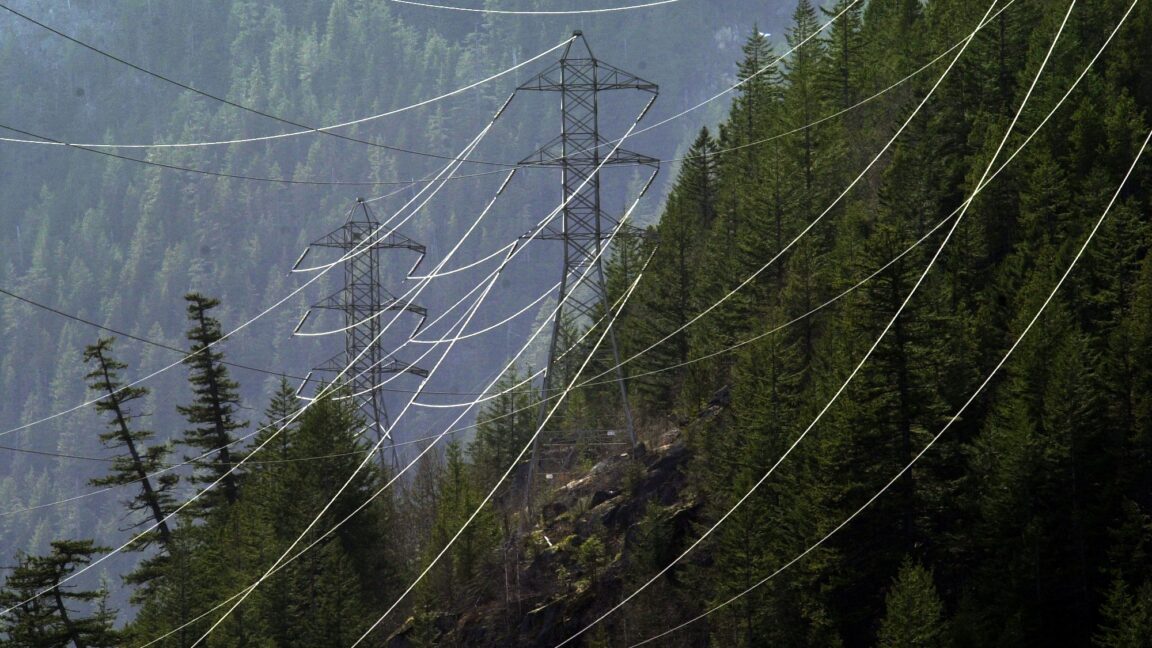
    The last coal-fired power plant in Washington state was set to go cold at the end of the year. It would then switch to natural gas, cutting carbon emissions in half.

    The shutdown had been in the works for 15 years and was mandated by state law. It required the Canadian energy company that owns the power plant, TransAlta, to retrain workers and ease the local community’s economic transition.

    But the farewell to coal was canceled this week by the Trump administration. In furtherance of the president’s crusade to keep America’s coal plants burning, the Department of Energy announced Tuesday that an “emergency exists” in the Pacific Northwest “due to a shortage of electricity.” To keep the lights on, Energy Secretary Chris Wright said that the Centralia electric generating facility in southwest Washington must continue to burn coal for at least 90 more days.
     

    A Top Source of Lead Pollution Faced Tighter Rules. Then Trump Intervened.​

    The president exempted a copper smelter in Arizona from air-quality rules. An E.P.A. official guided the company that sought the exemption, emails show.

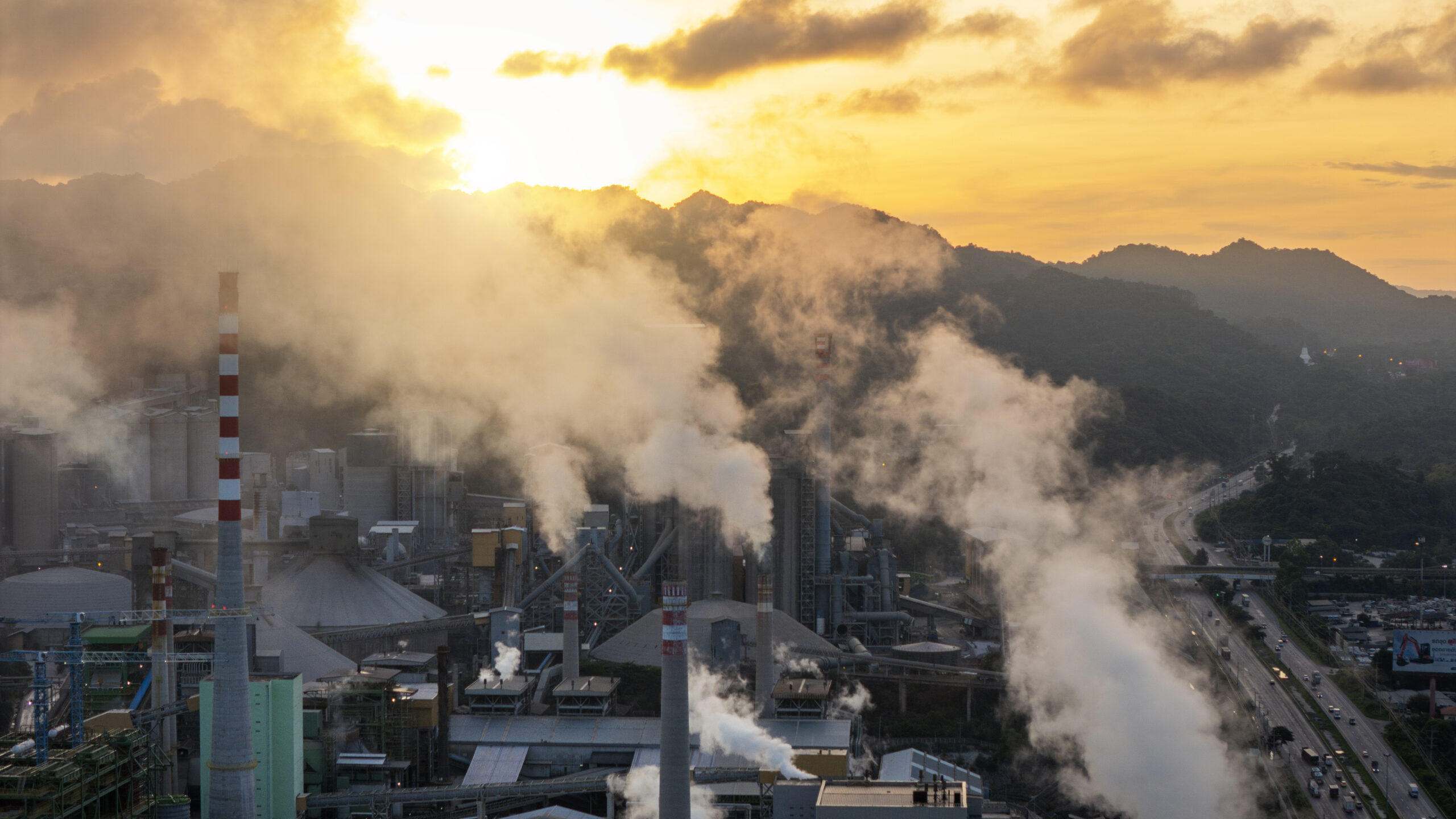
    Under rules put in place by the Biden administration, the facility’s owner, Freeport-McMoRan, would have been required to install technology to reduce its toxic emissions. But in October President Trump exempted the smelter from complying with limits on lead, arsenic, chromium and other hazardous pollutants for the next two years.

    Freeport did not have to present an exhaustive argument for why it deserved a reprieve. There was no economic analysis or engineering study. It was as easy as sending an email to the Environmental Protection Agency, where a senior official provided guidance to a lawyer for the company, according to emails and documents reviewed by The New York Times.

    It’s one of many efforts by the Trump administration to weaken or waive environmental protections that companies view as overly burdensome. In the past year, the administration has proposed rolling back more than a dozen regulations governing air pollution, water contamination and planet-warming greenhouse gas emissions.
     
    Most Americans now connect the worsening climate crisis with their cost of living pressures, with clear majorities also disagreeing with moves by the Trump administration to gut climate research and halt windfarms, new polling has found.

    About 65% of registered voters in the US think that global heating is affecting the cost of living, according to the polling by Yale University.

    Extreme weather events such as floods, droughts, storms and heatwaves, exacerbated by the climate crisis, are taking a toll on food production, with recent spikes in the cost of coffee and chocolateblamed by experts, at least in part, on global heating.

    Meanwhile, many Americans have faced rising home electricity costs and steep increases in home insurance premiums, with both of these areas also influenced by the climate crisis and the Trump administration’s decision to choke off solar and wind power, often the cheapest source of energy.

    There has also been a broad backlash in many communities against new datacenters, which have been championed by the administration and the tech industry for advancing artificial intelligence but attacked by critics for causing planet-heating emissions and raising power bills.

    Anthony Leiserowitz, director of the Yale Program on Climate Change Communication, said that despite focus on the climate crisis drifting away among many politicians and activists, many Americans are grasping the connection between rising temperatures and rising bills.

    “I find it stunning that even some people in the climate community say that we should stop talking about the climate because there’s a cost-of-living crisis going on,” he said.

    “It’s a fundamental error to treat these issues as mutually exclusive – climate solutions are also cost-of-living solutions. Most of the elite discourse is very bad at estimating or understanding levels of public concern, and this is a good example of this.”

    In an era where concerns about immigration, crime and inflation appear to dominate, Leiserowitz said that the climate crisis can still motivate voters if handled correctly.

    “If your kid has asthma, you should care about climate change. If you want to make money, you should care about climate change. If you like chocolate, you should care about climate change,” he said. “If we are stuck talking about this from just a scientific or political standpoint, that’s an incredibly narrow set of stories to tell, when this is the biggest story on the planet.”

    Since taking office, the Trump administration has set about dismantling key environmental rules, firing federal scientists, removing public information on the climate crisis and explicitly backing the fossil fuel industry over cleaner forms of energy. The president has said that renewables are a “con job” and a “scam” and has attempted to ban certain solar and wind farms.

    This agenda is deeply unpopular with a clear majority of Americans, the Yale polling suggests, with nearly eight in 10 registered voters opposing restrictions on climate information and research, while the same proportion of voters reject Trump’s demand that the Federal Emergency Management Agency (Fema) be eliminated. A further 65% of voters disagree with Trump’s move to block new offshore windfarms.

    “This sort of thing keeps happening – the EPA’s website has been scrubbed of climate information and the administration wants to kill off one of the world’s most pre-eminent climate research organizations for ideological reasons,” said Leiserowitz.

    “The majority of people think this doesn’t make sense. The last election clearly wasn’t a referendum on climate change – there was very little discussion on it – and yet the administration is treating it as though it was. There was no mandate to do all of this. This is why all the polls show Trump is deeply underwater on all of these issues.”……….

     
    11 democrats voted for this

    The bill seeks to reform foundational environmental regulations that govern how major government projects are assessed and approved by amending the landmark 1970 National Environmental Policy Act (NEPA), signed into law under the Nixon administration. NEPA requires federal agencies to review and disclose the environmental impacts of major projects before permitting or funding them. Although NEPA reviews are only one component of the federal permitting process, advocates argue that they serve a crucial role by providing both the government and the public the chance to examine the knock-on effects that major projects could have on the environment.

    A last-minute loophole for Trump’s energy agenda


    On Tuesday, Republican lawmakers in the Rules Committee were able to amend the SPEED Act in a way that would facilitate the Trump administration’s ongoing efforts to axe renewable energy projects. The changes were spearheaded by Andy Harris (R-Md.) and Jeff Van Drew (R-N.J.), two vocal proponents of Trump’s energy policies. The amendment fundamentally undermined the technology-neutral aspirations of the bill—and any hope of receiving widespread support from moderate Democrats or the clean power industry.

    According to Matthew Davis, vice president of federal policy at the League of Conservation Voters, Harris and Van Drew’s amendment would allow the administration to exclude any project from the bill’s reforms that the Trump administration had flagged for reconsideration—something the administration has done repeatedly for renewable projects like offshore wind.

    The result, Davis argued, is that the bill would speed up the environmental review process for the Trump administration’s preferred sources of energy—namely, oil and gas—while leaving clean energy projects languishing.
     
    Five projects hit at once

    The stop-work order applies to five US offshore wind farms currently under construction: Coastal Virginia Offshore Wind in Virginia; Vineyard Wind 1 in Massachusetts; Revolution Wind serving Rhode Island and Connecticut; and Sunrise Wind and Empire Wind in New York. Democratic governors in the other four states have vowed to fight the stop-work order.

    All five projects are active construction sites that rely on narrow weather windows, specialized vessels, and tightly timed supply chains.


    The Department of Energy ordered Colorado coal plant to stay open for three months, one day before it was set to close. The coal plant will require tens of millions in repairs to get up and running again, and its retirement was expected to save Colorado ratepayers $79 million per year.
     
    Another day, another horror
    In a presidential memorandum issued on Wednesday evening, Trump said the US would withdraw from the UN Framework Convention on Climate Change and 65 additional UN and other multilateral groups, mostly linked to the environment, renewable energy, development, education, and the promotion of democracy and human rights
     

    Create an account or login to comment

    You must be a member in order to leave a comment

    Create account

    Create an account on our community. It's easy!

    Log in

    Already have an account? Log in here.

    General News Feed

    Fact Checkers News Feed

    Back
    Top Bottom